What children explored
Understanding Code Before the Screen
This is unplugged coding, one of Thrive's signature practices. Children first need to understand what code actually is, why a computer needs its own language, what a loop means, and what it is to debug. Scratch and Python come later.
During unplugged coding activities, learners explored basic coding concepts through engaging, hands-on experiences without computers. They followed step-by-step instructions, understood sequencing, and explored loops by repeating actions. They also practiced debugging by identifying and correcting mistakes.
One child becomes the programmer. Another becomes the robot. Instructions must be precise, sequences must be correct, and when things go wrong, that is debugging, and it is celebrated.
Activities from this theme
What children made and tested
Grid Programming
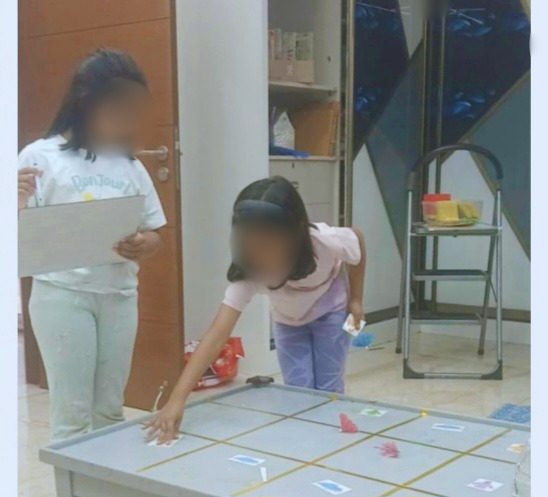
Children worked on a large floor grid where one child wrote instruction cards and another followed them as the robot. They learned that instructions must be precise and in the correct order. Small errors led to debugging conversations.
Loop Cards
Children used physical cards to represent loops. They walked out the loop patterns themselves, repeating sequences of movement, and discussed why loops are more efficient than writing the same instruction many times.
Find the Bug
Children were given a set of instructions with a deliberate error. They had to follow the instructions exactly, find where the robot went wrong, identify the error, and fix it. Failure was data and was celebrated.
Collaborative Programming
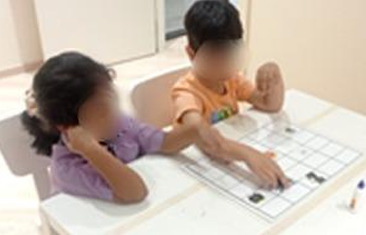
In small groups, children worked together to write a sequence of instructions that would move the robot from one point to another on the grid. They negotiated, tested, and revised their programmes together.
Gallery
From the session
What comes next
After unplugged: Scratch and Python
Once the foundations of computational thinking are solid through unplugged work, children move to screen-based coding naturally. Children who understand the concept can learn any tool. Scratch, Python, and beyond follow from these first principles.