What children explored
Exploring Weather and Water
The monsoon theme brought together science, engineering, mathematics, and art through a rich set of hands-on investigations. Children began by exploring the water cycle: where does rain come from, how does water travel from the ground to the sky and back again, and what happens when too much falls at once.
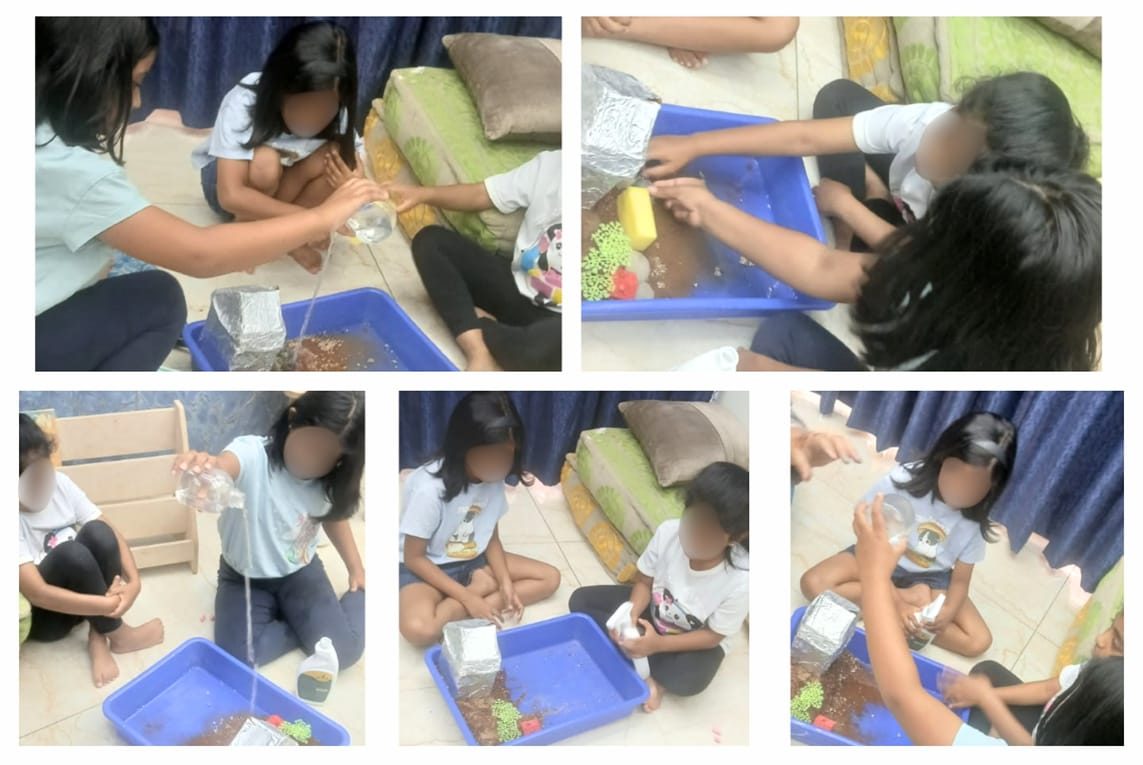
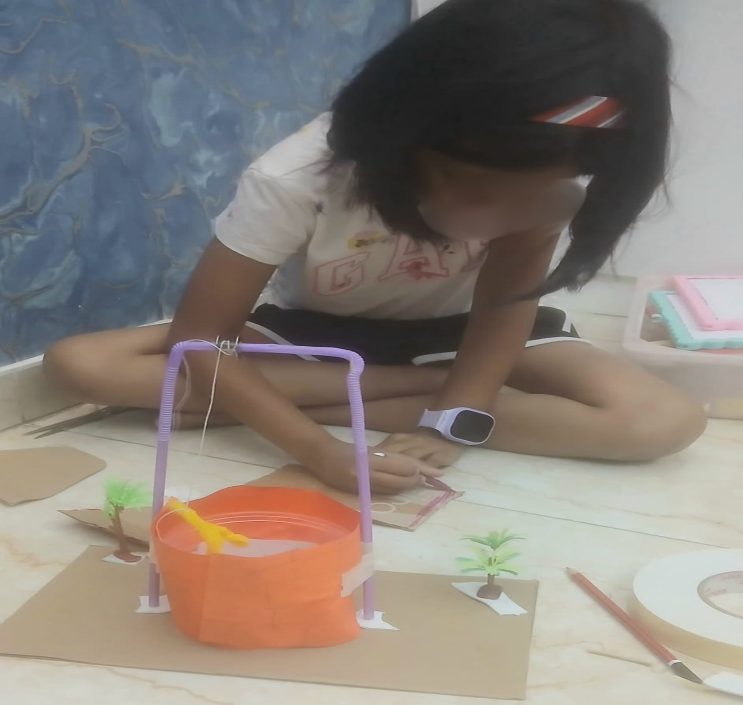
They observed cloud formation in a jar, measured rainfall with rain gauges they constructed themselves, and designed structures to withstand water. The engineering challenge of building a monsoon-proof house became a full design cycle: plan, build, test against real water, revise.
Activities from this theme
What children made and tested
Build a Monsoon-Proof House
Children designed and built small structures using cardboard, foil, and other materials, then water-tested them. They worked through the full engineering design cycle: plan, build, test, revise.
Cloud in a Jar
Using warm water, hairspray, and ice, children observed cloud formation inside a jar. They saw condensation happen in real time and connected it to what happens in the atmosphere during monsoon season.
Designing a Flood Barrier
Children studied how floods affect communities and then designed and tested their own flood barriers. Working in small groups, they tested different materials for water resistance, height, and stability.
Making a Rain Gauge
Children built their own rain gauges from plastic bottles, marked measurements, and recorded rainfall data. They graphed and discussed results together, connecting mathematics to real environmental observation.
Gallery
From the session
The Book
Paired read-aloud

Feel the Wind
Part of the Thrive library collection, this title was chosen for its evidence-based approach to understanding how wind works. Wind is just air moving. When moving air touches our skin, it creates pressure and friction, and that is when our skin's nerve endings can detect it. Wind is felt when moving air stimulates skin receptors and carries heat away from the body. The read-aloud was structured with pauses and questions to help children connect the text to their own physical experience of wind and rain.