Thrive Library — The Literate Child

900+ books.
Zero random reads.

Every book in our collection was chosen with intention. Our library specialist curates each title to match the theme being explored and trains teachers in how to use it effectively.
Hear from Meenu Gera, our library expert

How do I choose books for my STEAM young learners

Developing a library collection is a thoughtful process. Books should be selected with both purpose and balance. At Thrive, our collection is built to support scientific curiosity, emotional growth, and meaningful learning.

From picture books to non-fiction titles, each book is selected with the intent to encourage purposeful learning, deeper thinking, and genuine connections. The Thrive STEAM library includes a wide range of narratives and social-emotional texts that nurture empathy, self-awareness, and emotional understanding.

Picture books are selected using the research-based framework of “Mirrors, Windows, and Sliding Glass Doors.” This allows children to see themselves in books and to learn about lives different from their own.

“We don’t need a list of rights and wrongs, tables of dos and don’ts: We need books, time, and silence. Thou shalt not is soon forgotten, but Once upon a time lasts forever.”

— Philip Pullman

Expressive voice tones

The reader’s voice should always match the mood, character and action in the story. A joyful moment may be read with warmth and excitement, while a suspenseful moment may need a slower tone. Change of expressions help children to understand and follow the story more closely.

Thoughtful pauses

Good pauses before turning the page can build suspense, and also give them time to predict, reflect and connect to the story with their own ideas and experiences.

Active engagement & critical questioning

The reader should always invite participants to notice illustrations and share their thoughts on it. Inferring and making connections is the key to listening to read alouds.

Read Aloud Sessions

A meaningful read aloud is more than reading words from a book. By reading a story out loud, we aim to bring a story to life, build connections with our audiences and create a warm space where they can think, wonder and respond. An engaging read aloud requires a carefully selected title, different character tones, pauses for engagement, participation and critical questioning to keep children emotionally and intellectually involved.

The reader’s voice should always match the mood, character and action in the story. A joyful moment may be read with warmth and excitement, while a suspenseful moment may need a slower tone. Change of expressions help children understand and follow the story more closely. Good pauses before turning the page can build suspense, and give children time to predict, reflect and connect to the story with their own ideas and experiences. Engaging interactions are a sign of a meaningful read aloud. The reader should always invite participants to notice illustrations and share their thoughts on it. Inferring and making connections is the key to listening to read alouds.

A successful read aloud includes expressive voice tones, thoughtful pauses, active engagement, audience participation and critical questioning. When these strategies are being used, a read aloud becomes a powerful way to develop listening skills, imagination, comprehension and deeper thinking.

Theme reads,
chosen with care

Every book in our collection was chosen with intention. Our library specialist curates each title to match the theme being explored and trains teachers in how to use it effectively.

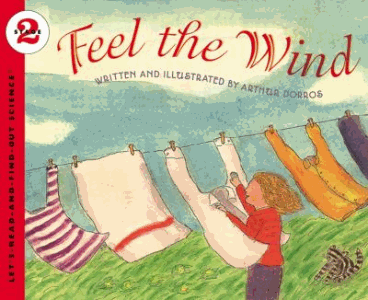
Feel the Wind by Arthur Dorros
Monsoon

Feel the Wind

Arthur Dorros

This title is part of the Thrive library. It uses an evidence-based approach to analyze how we feel wind. Wind is just air moving. When moving air touches our skin, it creates pressure and friction and that’s when our skin’s nerve ending can detect it. Wind is felt when moving air stimulates skin receptors and carries heat away from the body.
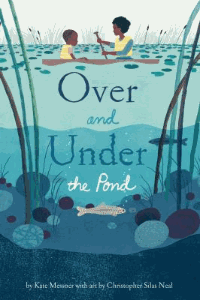
Over and Under the Pond by Kate Messner
Pond Life

Over and Under the Pond

Kate Messner

This is one of my all-time favourite books. It supports strong inquiry-based learning about how a pond ecosystem functions. It helps children understand the interdependence among animals, insects, fish, and plants. Children carefully examine the life cycles and development of different pond creatures, using this text as a reference for information.
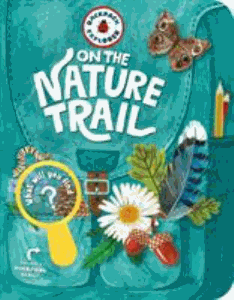
On the Nature Trail by Kathleen Yale
Plants and Growth

On the Nature Trail

Kathleen Yale

On the Nature Trail encourages children to build early scientific thinking through direct observation and sensory exploration. This book keeps children engaged and encourages them to observe nature by looking at birds, trees, flowers and clouds. This science-focused book invites young scientists to investigate nature closely, develop early inquiry skills and record their findings.
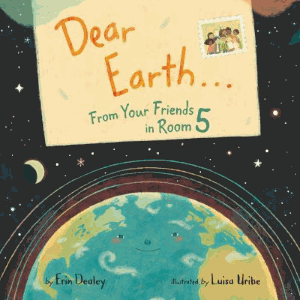
Dear Earth by Erin Dealey
Earth and Geology

Dear Earth: From Your Friends in Room 5

Erin Dealey

From Your Friends in Room 5 - An environmental sciences book – it introduces children to sustainability and conservation. I curated its lesson plan by asking critical questions about how to do better for our environment. My strong intent is to teach them the importance of these concepts and how we must act NOW. Children are encouraged to make good choices on reducing waste, environmental pollution and conserving energy. It is an epistolary narrative, a story that is told through letters – in the process, encouraging kids to improve their writing skills.
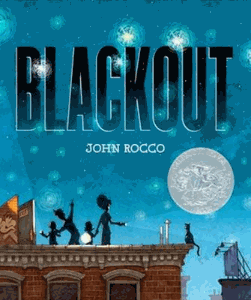
Blackout by John Rocco
Light and Shadows

Blackout

John Rocco

This fun narrative is about neighbours gathering on the roof after the power goes out. With a scientific lens - we encouraged children to investigate and explore the physical science of light, darkness and visibility. In Blackout, I made our little explorers think about how shadows change when artificial light disappears. Children made a connection with the science of shadow formation and discussed seeing stars and experiencing the city differently during the blackout.
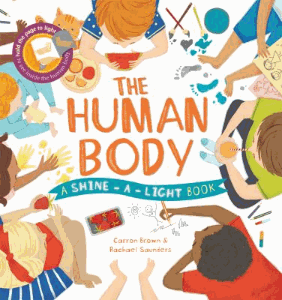
The Human Body by Carron Brown
The Human Body

The Human Body

Carron Brown

In this Shine-a-Light series non-fiction picture books children examine human anatomy and physiology in a simple, visual and interactive way. It’s a shine-a-light format book that allows children to reveal hidden internal structures by holding the pages to a bright light, which supports curiosity, close observation and exploratory learning. My intent is to keep my students engaged with the subject specifics and these books are lifelong memories for them.
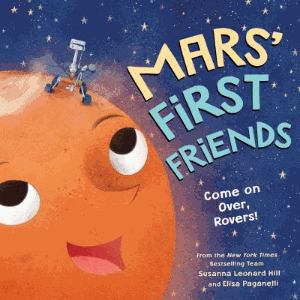
Mars' First Friends by Susanna Leonard Hill
Space and Universe

Mars’ First Friends

Susanna Leonard Hill

This Read Aloud is another very special one and talks about imagination and facts about Mars. Children learned about planetary features, atmosphere and climate, geology, water, exploration, habitability, comparison with earth and the future of human settlement. My lesson plan blends imagination and information to create a deeper understanding of planets, friendship and scientific discovery.

Most celebrated titles in our STEAM class

Classroom favourites

I ain’t gonna paint no more!Karen Beaumont
Water PrincessSusan Verde
Muncha, Muncha, MunchaCandace Fleming
Jabari JumpsGaia Cornwall
Gabi’s if/then gardenCaroline Karanja
If I built a schoolChris Van Dusen

Materials that invite thinking

At Thrive, materials are never props. They are how children investigate, compare, test, build, measure, and explain. We use a thoughtful blend of scientific tools, everyday objects, maker materials, and art media — chosen not for display, but for what they allow young minds to do.

Children might work with real beakers, droppers, thermometers, and copper tape circuits one session — and balloons, vinegar, sponges, and recycled bottles the next. Some materials help them observe. Some help them experiment. Some help them prototype and build. All of them help ideas become tangible.

Scientific Tools

Safety goggles, magnifying glasses, measuring jars, thermometers, hygrometers, beakers, test tubes, droppers, funnels, weighing scales, magnets, copper tape, LED bulbs, coin batteries, flashlights.

To observe, measure, test, and explore with precision.

🟡

Everyday Exploration

Vinegar, baking soda, Epsom salt, balloons, rubber bands, food colours, oil, corn starch, pebbles, wool, sponge, bubble wrap, foil, jute string, paper cups, cardboard rolls, recycled bottles, natural objects.

Familiar materials that become meaningful in the context of an investigation.

Engineering and Construction

Magna-tiles, Jenga blocks, dominoes, wooden blocks, building sets, plastic pipes, skewers, corks, pipe cleaners, clay, straws, tape, popsicle sticks, rubber bands.

To build, design, balance, test, and understand how things work together.

🎨

Art and Sensory Media

Paints, polymer clay, air dry clay, threads, yarn, masking tape, brushes, sponges, Suminagashi inks, copper tape for circuits, natural materials including flowers, leaves, and twigs.

Where creativity and scientific observation meet.

Real tools. Real thinking.

We do not use toy versions of scientific instruments. We use real tools — scaled appropriately and handled safely — because children deserve to be taken seriously as thinkers. When a child uses a hygrometer to measure humidity during a monsoon theme, they are not pretending to be a scientist. They are being one.