Where curious minds
discover the science
in everything.

Thrive is an inquiry-led STEAM studio built on a singular conviction: curiosity is the most powerful engine for learning, and the early years offer the most fertile ground to cultivate it.

Hands‑on · Inquiry‑driven · Joyfully rigorous

5+ Years running
900+ Curated books
30+ Years curriculum expertise
10+ Deep themes explored

Young children are already scientists

They notice patterns, ask questions, test ideas, build explanations, and make connections every single day. Between the ages of 3 and 10, the brain is at its most elastic, most open to exploring, questioning, and understanding how the world works.

But serious scientific thinking is rarely introduced at this age in a way that honours both the child's natural curiosity and their real intellectual capacity. Thrive fills that gap. We give children real materials, real questions, and real language for understanding the world — while protecting the wonder, movement, and imagination that belong to childhood.

90%

By age five, a child's brain has reached 90% of its adult size. The early years are the fastest period of brain growth in a human lifetime, we show up for those years.

900+

Subject-specific books, curated by a library science specialist to match every theme.

5+

Years running, growing stronger — built through real results, not theory.

S
Science

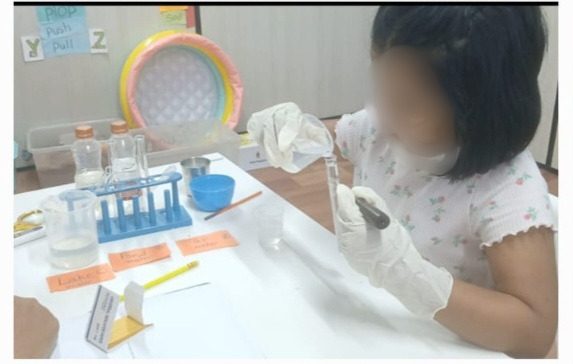
Chemistry, biology, physics — explored through discovery, not memorisation.

T
Technology

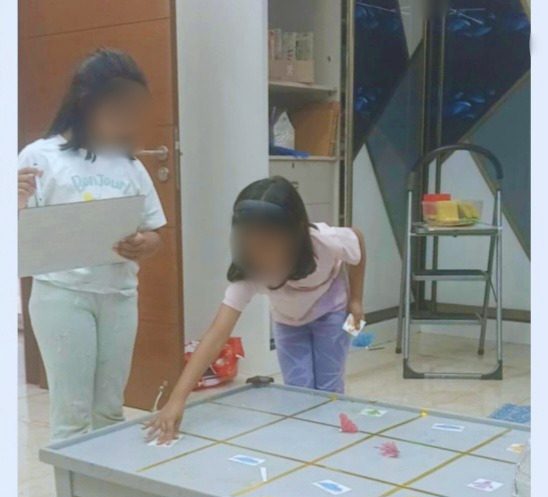
Unplugged coding — algorithms, loops, and logic before screens enter the picture.

E
Engineering

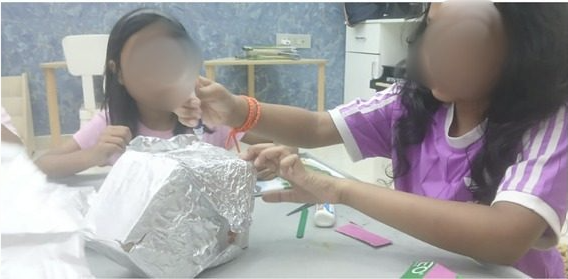
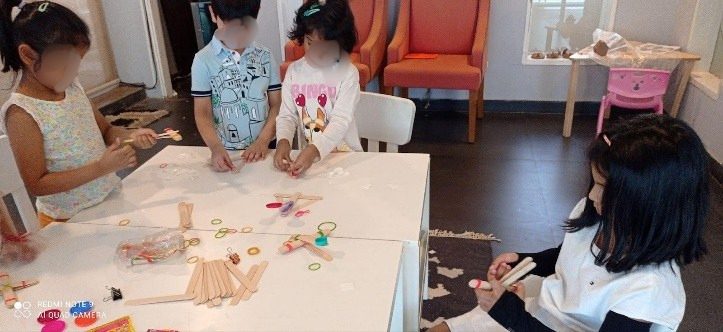
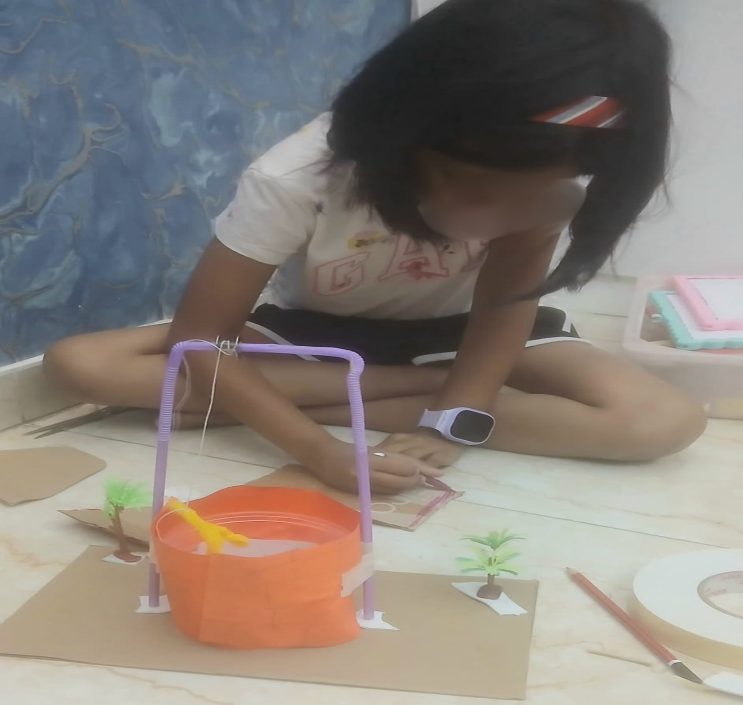
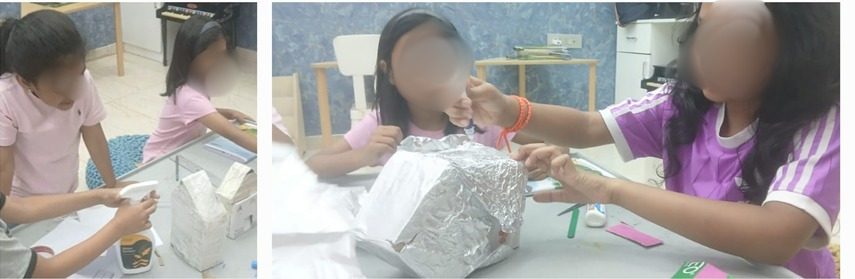
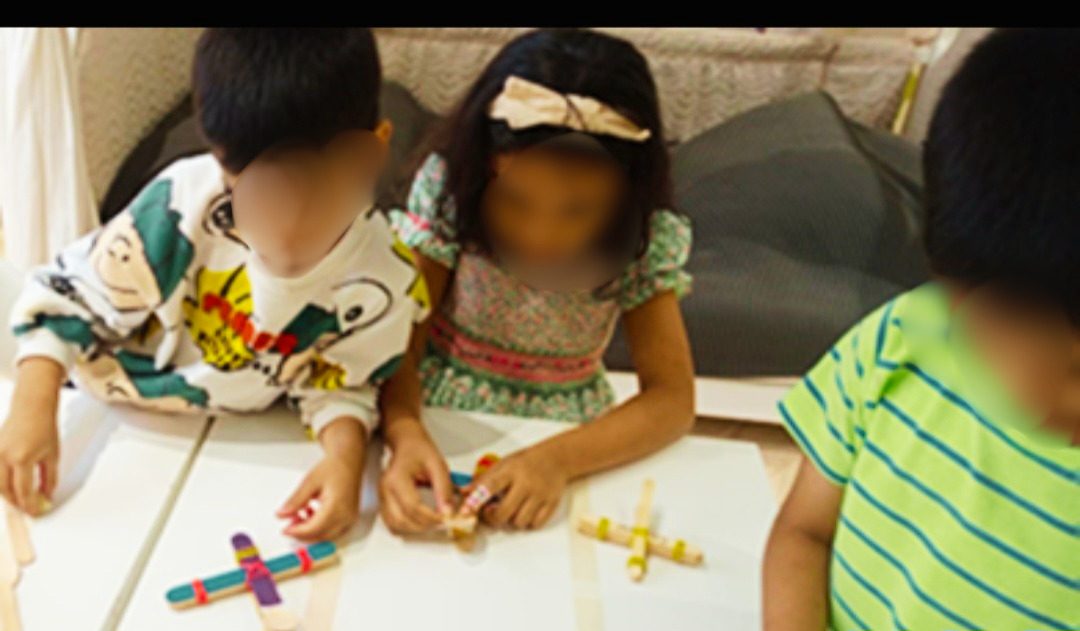
Build, test, refine. Real engineering thinking starts with cardboard and curiosity.

A
Arts

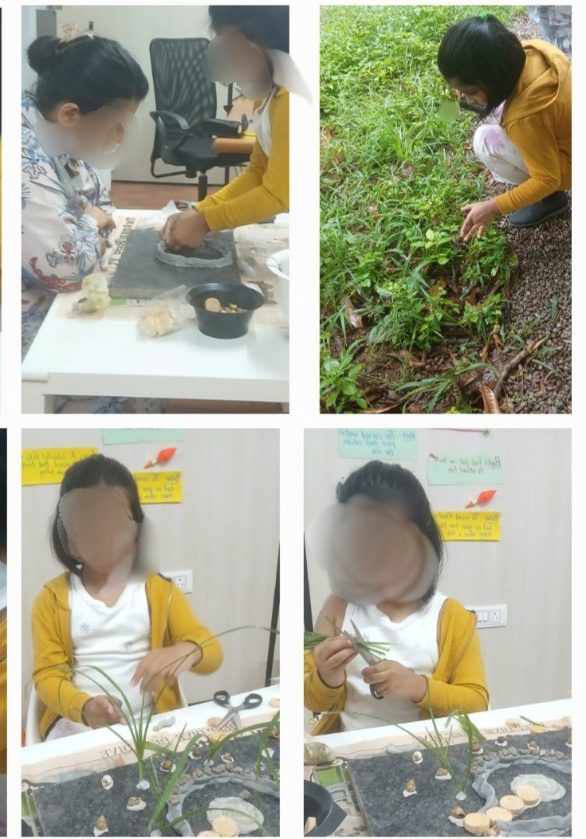
Art trains the scientist's eye. We draw to see, observe, and understand.

M
Mathematics

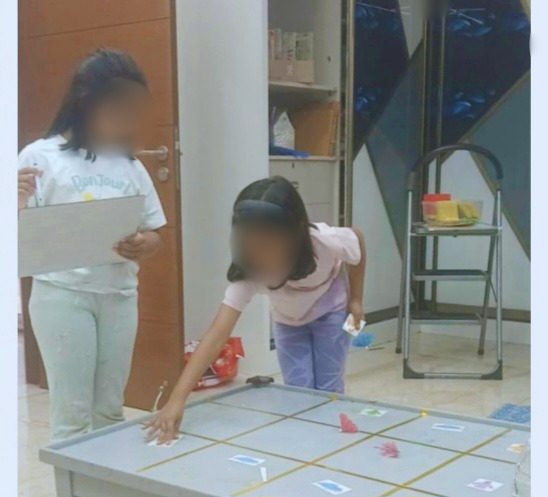
Measuring rainfall, building patterns, understanding scale — mathematics lives in the real world.

Intentional. Rigorous. Joyful.

We are not a playgroup. We are not a school. We are something more intentional than either — an early childhood STEAM studio where play, inquiry, and rigorous teaching come together in the same session, every time.

Every activity at Thrive has a purpose. Every material is chosen for what it allows children to notice, test, measure, build, or explain. And every teacher is trained to guide children toward discovery — rather than handing them the conclusion.

The three-step approach

Step 1

Wonder

A story, question, or demonstration sparks curiosity. “What do you think will happen?” “What do you notice?” The session begins with a real question — never a foregone conclusion.

Step 2

Explore

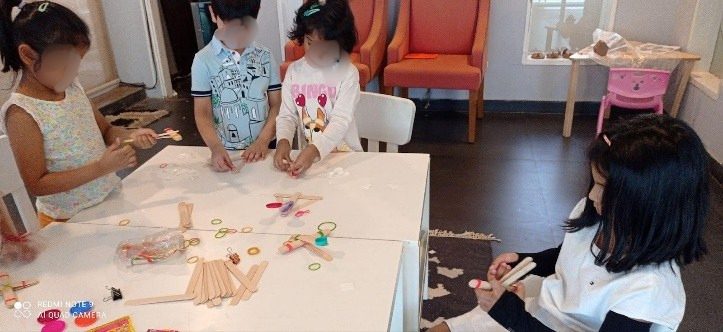
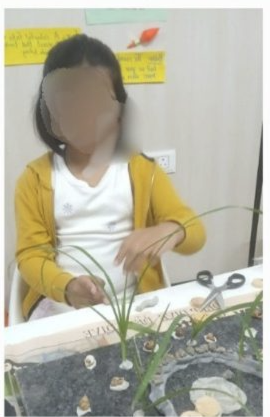
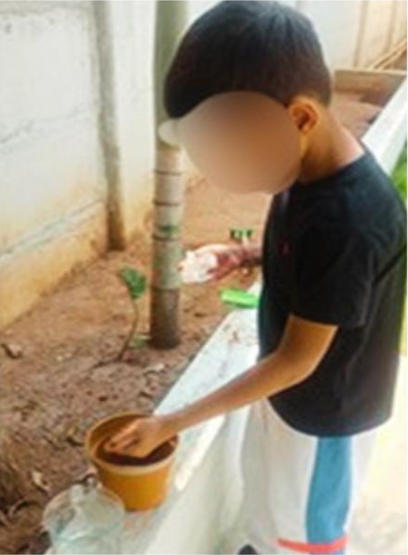
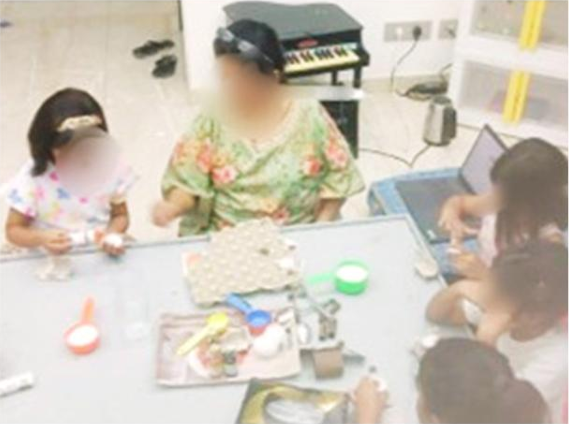
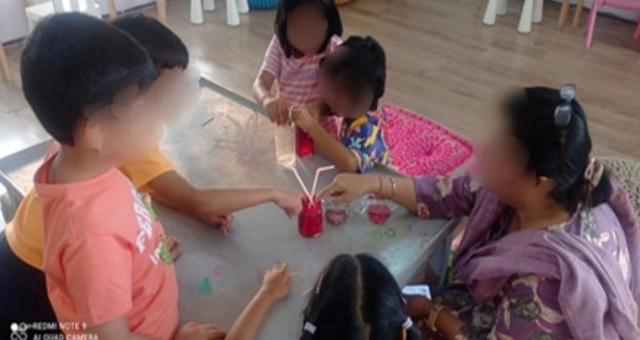
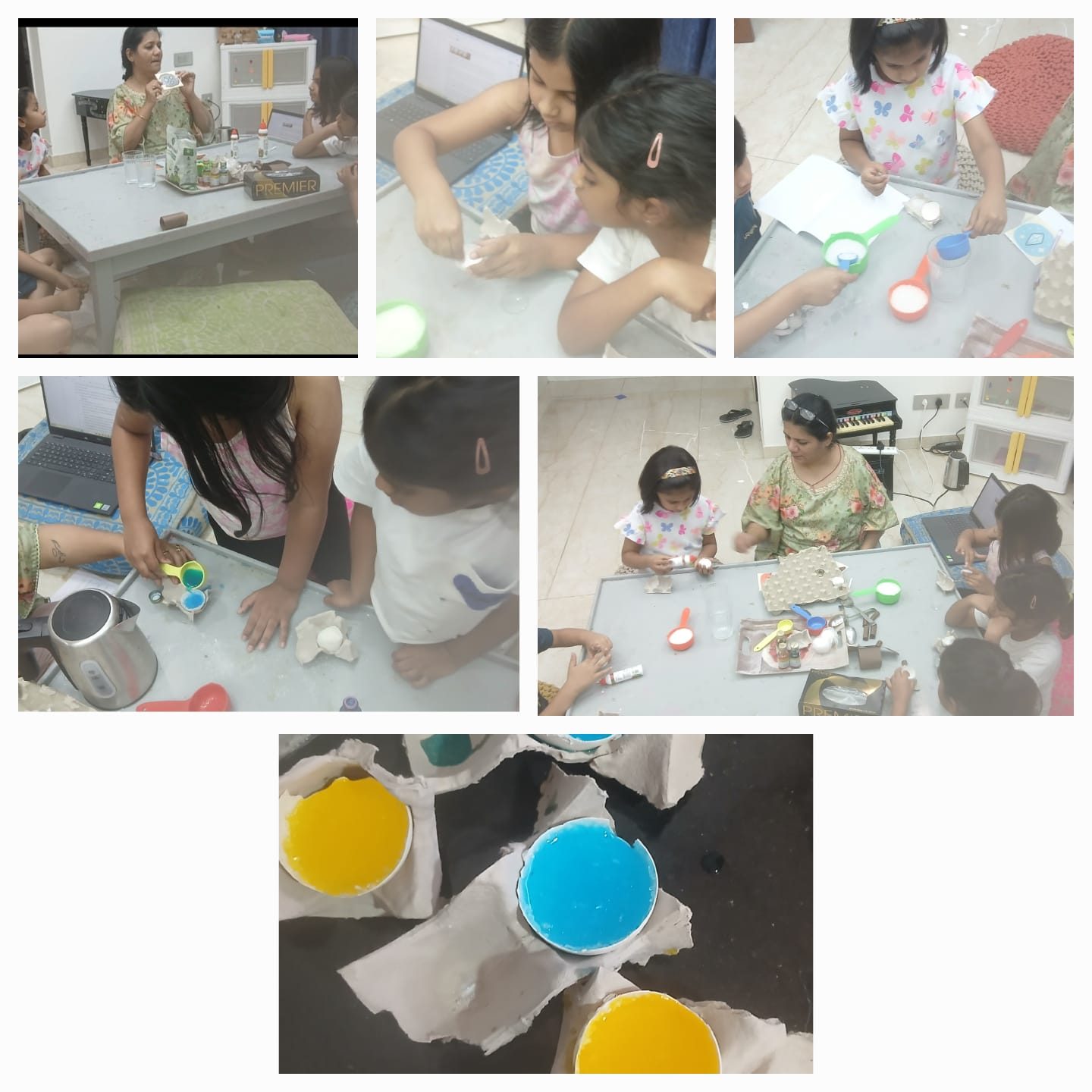
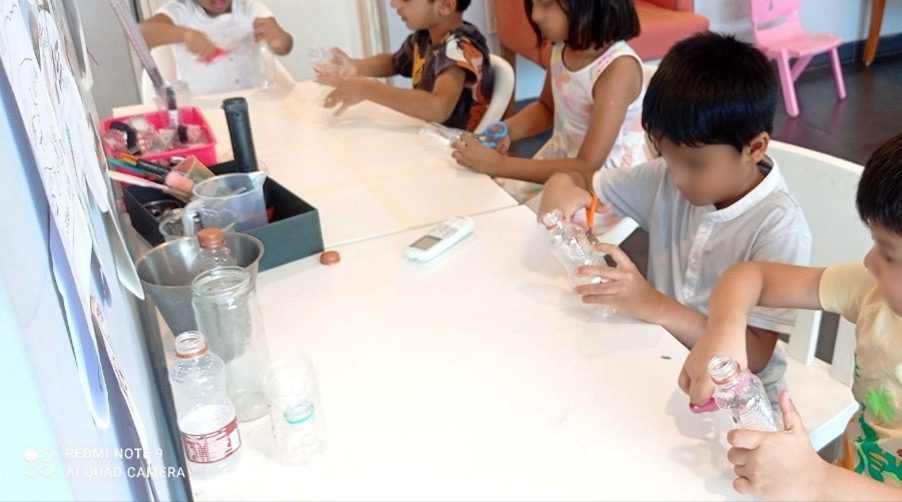
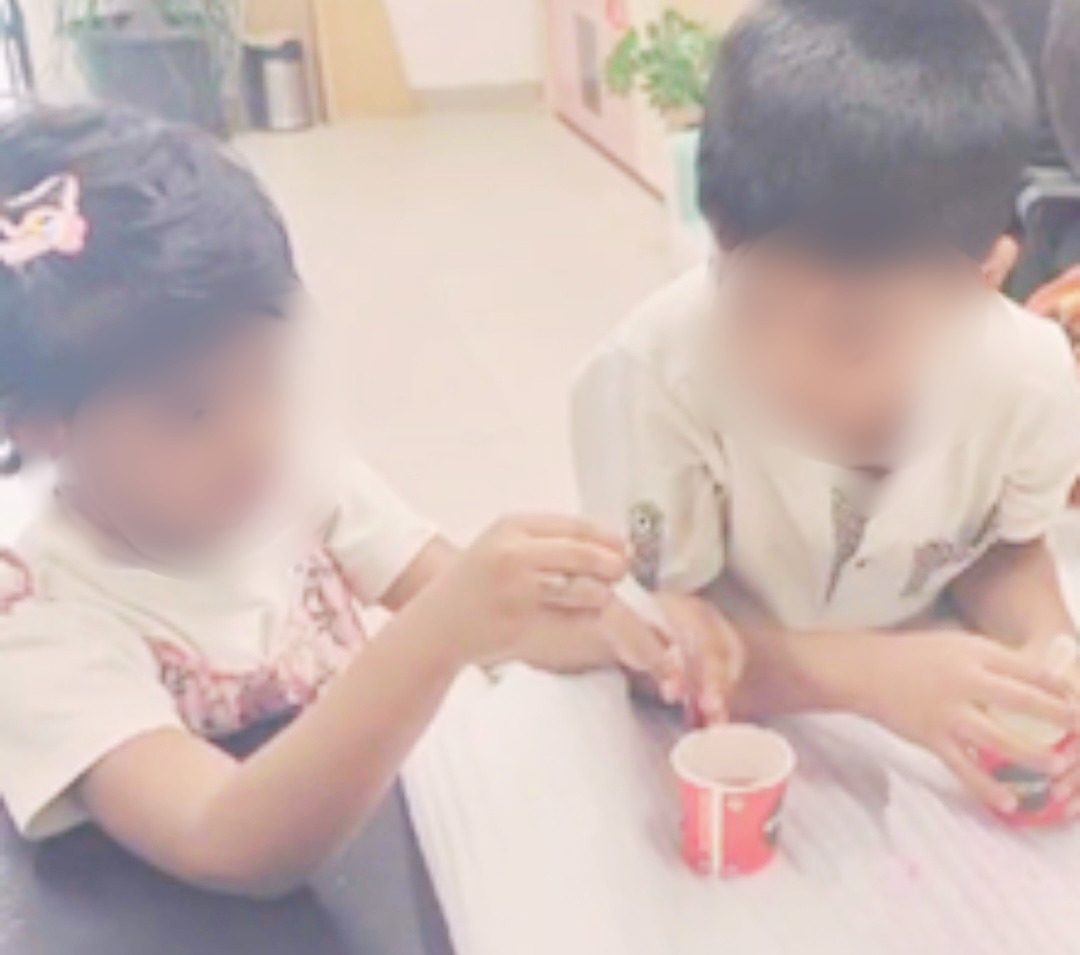
Children experiment with real scientific tools and open-ended materials. They build theories through hands-on inquiry — measuring, building, mixing, observing, drawing.

Step 3

Reflect

Children share observations, draw what they saw, retell what happened, and compare ideas. This is where understanding forms — not just recall, but reasoning.

What happens before a child
walks through the door

Most enrichment programmes hand teachers a plan and leave them to it. At Thrive, preparation is ongoing, structured, and expert-led — every single week.

Every theme, every activity, and every book is chosen for a specific age group and a specific developmental stage. Nothing is generic. Nothing is lifted from a general activity guide.

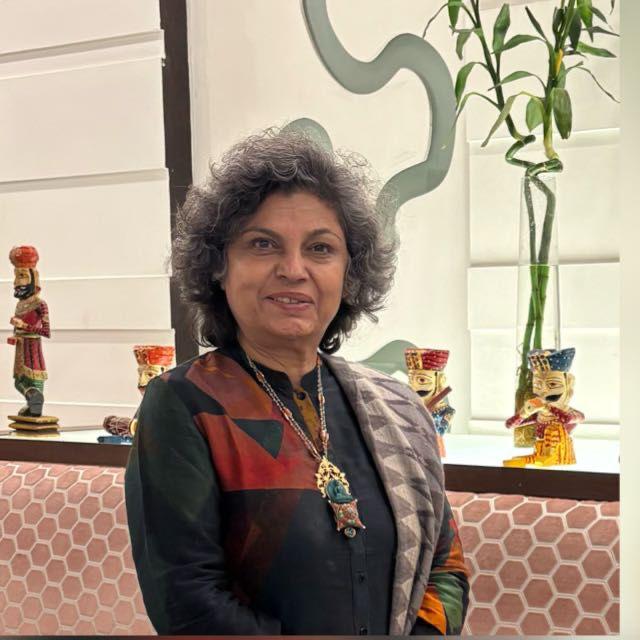
Our curriculum is designed by Nivedita Mukerjee, a biochemist and science specialist with a master’s degree in biochemistry, early research experience in genetics, and 30 years of experience spanning teaching, curriculum development, and educational leadership. Nivedita does not hand over a document and step back. She works actively with the Thrive teachers every week — reviewing what children responded to, adjusting what comes next, and sharpening how each concept is introduced.

Before every new theme, Nivedita trains the teaching team on the science behind the topic — so when a child asks why the flood barrier held, or why the crystal grew the way it did, the teacher’s answer is grounded in real understanding, not a rehearsed script.

How it works

Age-specific design

Every activity is calibrated for a specific age group. What a 4-year-old can hold in mind is different from what an 8-year-old is ready to investigate. That distinction shapes every session from the ground up.

How it works

Weekly training

Teachers are trained by Nivedita every week — not at induction and never again. The curriculum stays current, the teaching stays sharp, and the programme keeps improving with every cohort.

How it works

Responsive by design

What children notice, ask, and wonder about in one session shapes what comes next. The curriculum has structure — but it listens to the children inside it.

Every choice we make flows from
a clear set of beliefs

These are not principles on a wall. They are the decisions behind every session, every book, every material, and every question a Thrive teacher asks.

Art trains the scientist's eye

When a child has to draw a flower, they observe its parts. When they sketch a heart, they understand its structure. Drawing is not decoration at Thrive — it is a tool for close observation, which is the foundation of all scientific thinking.

Meaningful engagement over busy work

We do not do a fizzy volcano just for fun. Children understand the chemical reaction. What gas is produced? What does that have in common with a real volcanic eruption? The activity is only the beginning — the thinking is the point.

Real vocabulary from the start

We use precise scientific language in context — condensation, precipitation, kinetic energy, germination. Not to test children, but to make them feel at home in the language of science before school ever introduces it formally.

Questions over answers

The most important thing we teach is how to ask a good question. Our teachers lead children toward discovery rather than hand them the conclusion. First-principles thinking is a habit — and it is built, not born.

Curriculum that follows curiosity

Our curriculum is intentional, but it is also responsive. Themes are carefully designed; projects emerge from what children notice. If a child finds a beetle during a plants session, the inquiry follows that thread. The structure exists to support wonder, not replace it.

“We're not just doing experiments here. Children don't just do a fizzy volcano. They understand the science behind what's happening in that chemical reaction. They know why it reacts that way.”

— Thrive founder

Themes that come alive

We do not teach subjects. We explore themes. Each theme is examined through science, engineering, mathematics, art, and literacy — creating a full picture of how the world works. Here is what that looks like in practice.

900+ books. Zero random reads.

Every book in our collection was chosen with intention. Our library specialist curates each title to match the theme being explored and trains teachers in how to use it effectively.

Books at Thrive are not story time. They are an extension of the curriculum. Exploring monsoon? The book goes deeper into the water cycle. Learning about the heart? There is a story that brings its anatomy to life.

Our library was curated by Meenu Gera, a library science specialist who contributes to the Canadian government’s national literacy programme and sets up school libraries across the country.

For each title, she creates a lesson plan for the read-aloud: which questions to ask, when to pause, how to use the illustrations, and what to leave for children to discover on their own.

Our collection includes narrative picture books selected using the “Mirrors, Windows, and Sliding Glass Doors” framework, so children can see themselves in books, and also step into lives and worlds different from their own. Every title is purposeful. Every read-aloud is prepared.

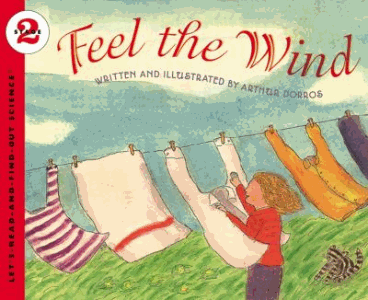
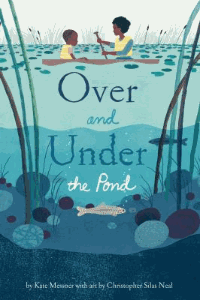
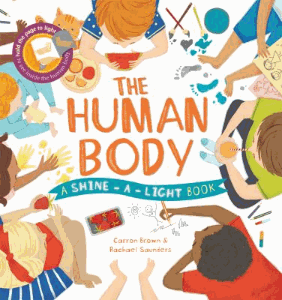
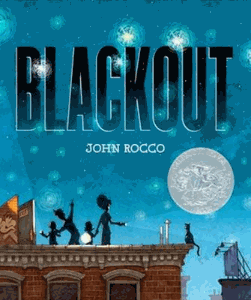
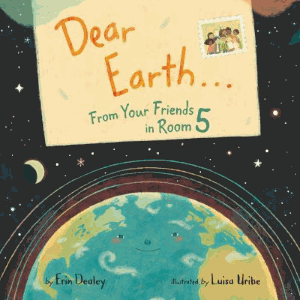
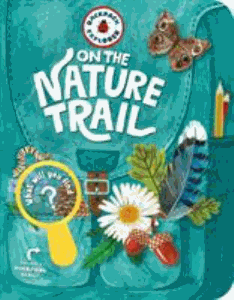
Feel the Wind by Arthur Dorros Over and Under the Pond by Kate Messner The Human Body by Carron Brown Blackout by John Rocco Dear Earth by Erin Dealey On the Nature Trail by Kathleen Yale
900+
Curated titles, each chosen for a reason

Collaborations

Thrive @ T-Works

From cardboard to creation

Thrive has signed an MOU with T-Works — Telangana’s world-class prototyping facility — to bring industrial making to young learners. What begins on a Thrive classroom table can now continue in a real workshop with 3D printers, laser cutters, and professional-grade materials.

Partner with us

Looking to collaborate with Thrive?

We're always open to partnering with facilities, makers, and organisations who want to bring hands-on learning to more young minds.

Reach out → admin@thrivesteam.com

Classroom making, upgraded

Our students — starting from ages 6 to 8 — move from building with cardboard to designing with 3D printing, laser cutting, and real workshop materials. The goal is a fundamental shift: from children who consume technology to children who create solutions.

Thrive brings the pedagogy and curriculum. T-Works brings the facility, equipment, and technical expertise. Together, we give children the rarest combination in early education — design thinking, iterative prototyping, and real-world problem-solving, at the age when the brain is most adaptable.

Currently in pilot stage, with cohorts of 5 to 10 students. If your child is aged 6 and above and ready to take their making to the next level, get in touch.

01

From sketch to 3D

Children understand volume, scale, and the journey from 2D drawing to 3D-printed object.

02

Material exploration

Guided sessions in wood, metal, and laser-cutting shops, understanding real material properties.

03

The prototyping cycle

Children test, break, and refine. From cardboard to high-fidelity models.

04

Safety and tool literacy

The ethics and discipline of a professional maker space, introduced early and taken seriously.

The people behind Thrive

Every person on the Thrive team brings both deep expertise and genuine care for the children they work with. This is not a group of generalists who do "enrichment activities." These are specialists in early childhood education, library science, and STEAM pedagogy — who chose to put those skills to work here.

Akila Chintalapathi Raju
Founder

Akila Chintalapathi Raju

Thrive was founded by Akila Chintalapati Raju — a New York Bar-qualified lawyer with a Master's in Law from New York University, and over a decade of experience across corporate law, private equity, and business leadership. She did not come to early childhood education through a conventional route. She came to it through a conviction: that the window between ages 3 and 10 is too important to leave to chance, and that children in this age group deserve access to the kind of rigorous, joyful, inquiry-led learning that most programmes reserve for much later. Akila founded Thrive as a non-profit initiative — bringing the same precision and seriousness she applied in law to the question of how young children learn best. She works closely with the curriculum team, stays involved in programme design, and continues to shape the direction of Thrive as it grows. Her background in law and governance means Thrive is run with the same care given to its teaching: structured, accountable, and built for the long term.

Founder Programme design Parent experience
Nivedita Mukerjee
Curriculum Director

Nivedita Mukerjee

Nivedita brings a rare blend of expertise to Thrive — the analytical rigour of a research scientist, the clarity of a Science and Technology journalist on national and international television, and the hands-on insight of a classroom educator across national and international curriculum schools. At the heart of her work is a simple but powerful belief: children are naturally curious, and giving them a scientific lens helps nurture the problem solving skills they need to engage meaningfully with the world around them. One of Thrive's founding team members, Nivedita has been instrumental in building the organization from the ground up. She works closely with the founder and the facilitators to ensure that a genuine scientific attitude rooted in inquiry, observation, and critical thinking runs through everything we do at Thrive.

M.Sc. Biochemistry 30 years in education Founding member, Neev Academy
Meenu Gera
Library and Literacy Specialist

Meenu Gera

Library science specialist based in Canada, supporting the Canadian government’s national literacy programme. Meenu curates every book in Thrive’s 900+ collection, and she does not just select titles. She writes lesson plans for each one, training teachers on how to conduct read-alouds that build scientific thinking, not just listening.

Library Sciences 28 years experience Canadian literacy programme
Our Team
Facilitators

Our Facilitators

Our sessions are led by a growing team of facilitators who bring over 20 years of collective experience in early childhood education. Trained in the Thrive method and supported by Nivedita's weekly curriculum guidance, they bring the sessions to life — guiding children through inquiry, read-alouds, and hands-on exploration with care, patience, and deep familiarity with how young children learn.

Questions we love to answer

These are the questions we hear most often, from parents who are curious, from educators who want to understand our method, and from everyone who has never quite seen something like Thrive before.

What exactly is Thrive?

Thrive is an early childhood STEAM studio for children aged 3 to 10. It blends the warmth and imagination of play-based learning with the intention and depth of a research-aligned curriculum. Children explore science, engineering, art, mathematics, and technology through stories, experiments, materials, and hands-on making — in sessions designed by educators who understand both child development and real scientific thinking.

Is Thrive a playgroup or a school?

Thrive sits between those familiar categories — and is not halfway in quality in either direction. Like a playgroup, children follow their curiosity, explore materials freely, and learn through joyful discovery. Like a school, our curriculum is intentional, rigorous, and rooted in early childhood research. Every activity has a purpose. Every material is chosen thoughtfully. And every exploration connects to a real scientific idea. We call ourselves an early childhood STEAM studio — because that is the most accurate thing we are.

Why STEAM for such young children?

Because ages 3 to 10 are when children naturally ask "why?" about everything. They are already scientists, builders, artists, and observers — our job is to give that instinct a home and a language. The brain at this stage is at its most elastic. Neural connections form fast and deep. Early STEAM does not accelerate childhood — it honours it, by giving children the tools to understand the world they are already so hungry to explore.

What makes a Thrive activity meaningful, not just busy?

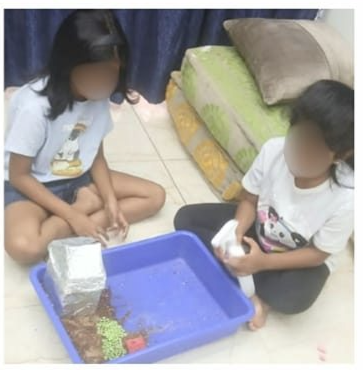
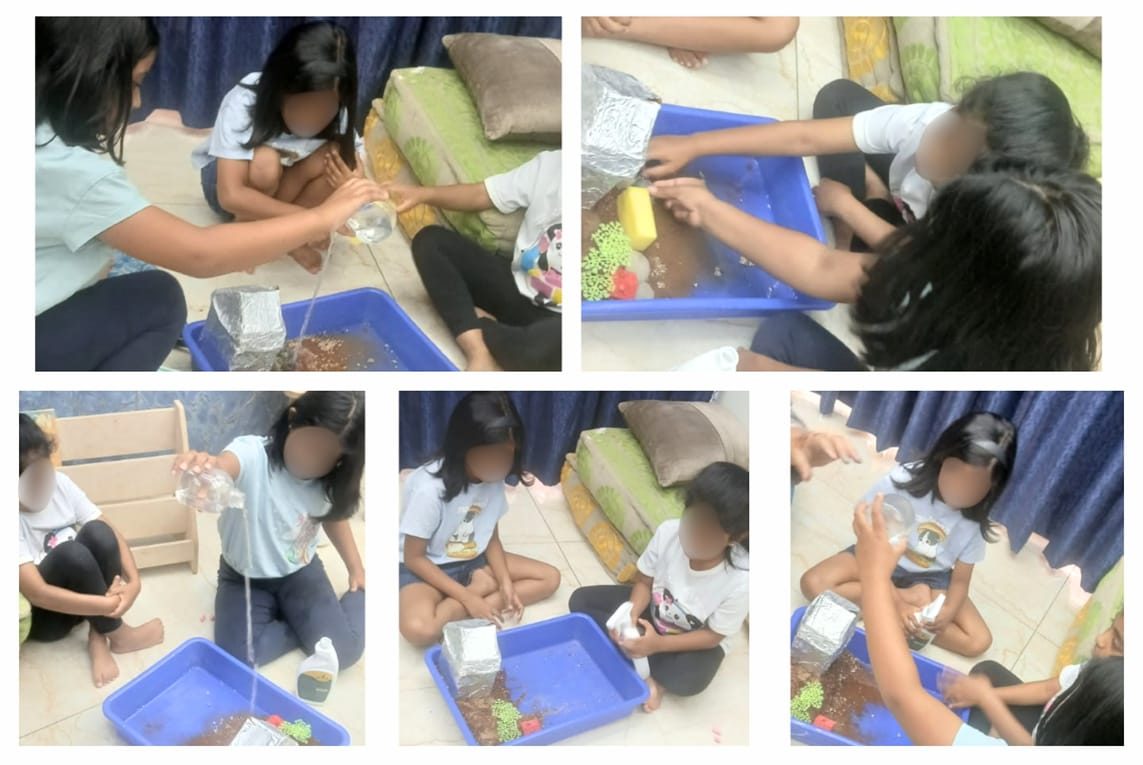
At Thrive, an activity is never there simply to occupy time. It is there to help a child observe, predict, compare, measure, build, explain, or revisit an idea. When children designed monsoon-proof houses, they were not just sticking cardboard together — they were applying material science, testing waterproofing, and iterating on their designs based on what failed. When they built a pumping heart model, they were not crafting — they were understanding chambers, valves, and blood flow. The hands may be busy, but the aim is always thinking.

Is the curriculum fixed or does it emerge from children’s curiosity?

Both. Themes are carefully designed and sequenced — but the learning within each theme is responsive. A strong curriculum gives children something meaningful to explore; a skilled teacher notices where their curiosity is leading and helps that inquiry deepen. If a child finds a beetle during a plants session, we follow that thread. The structure exists to support wonder, not replace it.

How do you balance joy and rigour?

Rigour is often mistaken for difficulty. At Thrive, rigour means depth. If children are exploring the monsoon, we do not just read a story — we measure rainfall, build flood barriers, study the water cycle, and investigate cloud formation. The joy comes from the "Aha!" moment of true understanding. When a child suddenly grasps why rain falls in drops and not sheets, or why their monsoon-proof house held up while another child's collapsed — that is joy and rigour at exactly the same moment.

Do children learn real scientific vocabulary?

Yes — and this is one of the things we feel most strongly about. Children hear and use precise scientific language in context from their very first session. Condensation. Precipitation. Kinetic energy. Germination. Photosynthesis. Not to test them, but to make them feel at home in the language of science before school ever introduces it formally. Language gives shape to curiosity — and children who have the words for what they observe think more clearly about what they are seeing.

What materials do children work with?

A thoughtful blend of scientific tools, everyday household objects, open-ended maker materials, art media, recycled resources, and books. Depending on the theme, children may use beakers, droppers, thermometers, hygrometers, copper tape, LED bulbs, magnets, or magnifying glasses — alongside balloons, sponges, seeds, clay, jute, foil, and cardboard. Materials are chosen not for display, but for what they allow children to test, build, measure, notice, and explain. We do not use toy versions of scientific instruments. We use real tools, handled safely.

How do books fit into a STEAM programme?

At Thrive, books are part of the investigation — not a separate "story time" activity. A read-aloud can deepen a science theme, expand vocabulary, sharpen observation, and open new questions. Our library of 900+ books is curated by a library science specialist to match every theme we teach, with lesson plans that train teachers on which questions to ask, when to pause, how to use illustrations, and what to let children discover on their own. Books at Thrive are evidence-based. Every title is chosen for a reason.

What do children take with them from Thrive?

They carry more than facts. They build observation, vocabulary, confidence, persistence, imagination, reasoning, and — most importantly — the habit of asking good questions. Children who learn to ask "why did that happen?" and "what would change if I did this differently?" become unstoppable learners. That is what Thrive is building, session by session.